I am a political sociologist specializing in international migration, state power, and governance.
I study how states and societies interact during governance processes, and how these interactions shape people’s lives and the institutions that govern them. Using ethnographic methods, my projects include multi-sited research on migrant work in Thailand, forced migration in Southeast Asia, and refugee resettlement in the United States. I am a Postdoctoral Fellow in the Department of Sociology at Stanford University and a past American Council of Learned Societies Fellow. I hold a PhD in sociology from the University of California, Los Angeles.


Research and Writing
Labor Migration Control
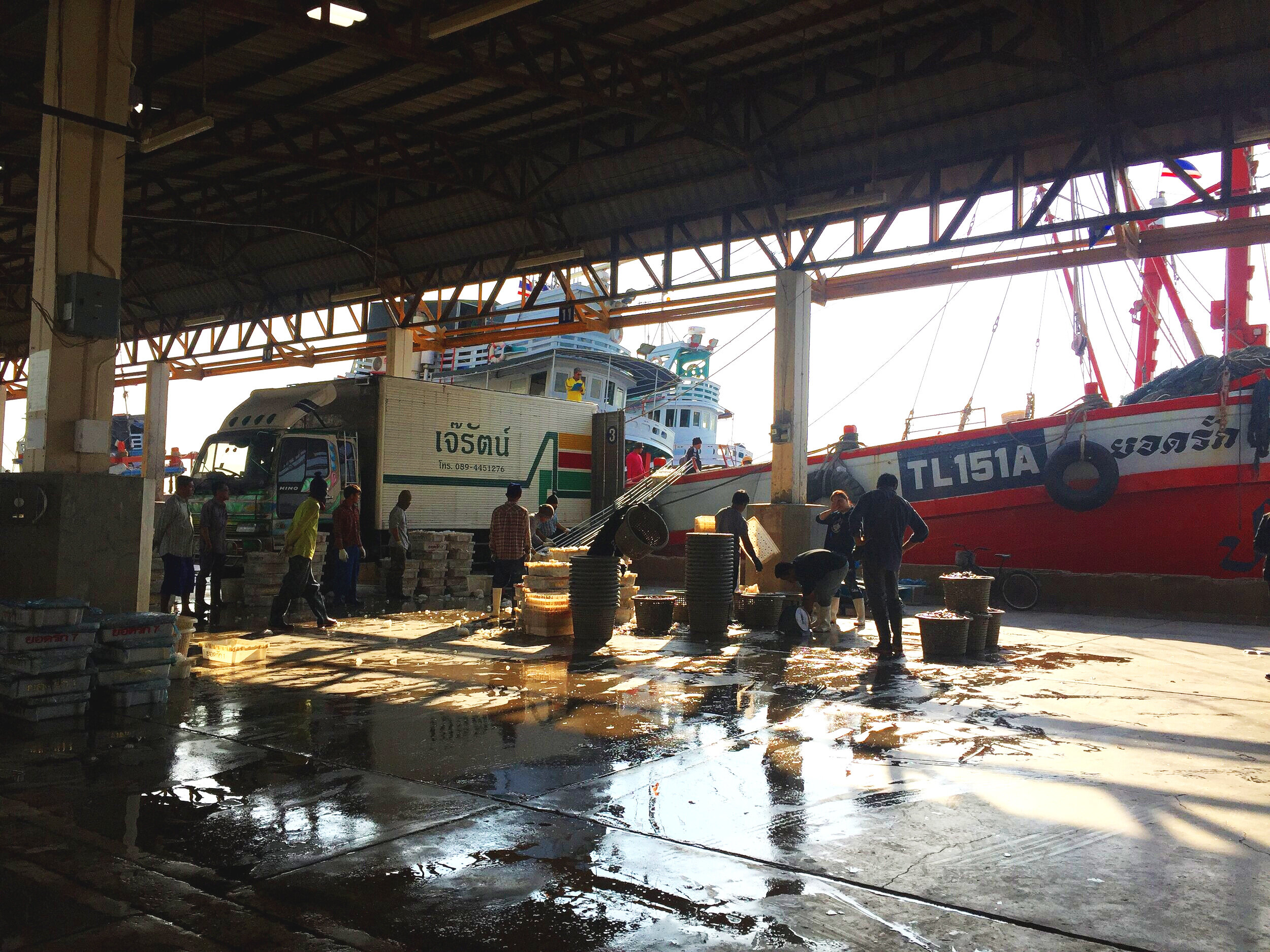
My first book, Embrace and Exclude: The Time-Space Control of Migrant Work in Globalized Thailand (forthcoming, Stanford University Press) is a comparative ethnography of guestwork regimes in Thailand, Southeast Asia’s most popular migrant destination. Examining a puzzling difference in how the state governs migrant workers across locations – strict enforcement of document time limits in some and heightened control over spatial boundaries in others – the book identifies the forces that shape these regulations and illustrates the processes that define them and their consequences for migrant lives and labor. Ethnographic fieldwork in a global seafood supply chain hub and in a regionally-linked special economic zone shows how co-occurring political economic imperatives encourage a patchwork of temporal and spatial regulations around migrant rights that shape the precarious conditions under which migrant workers live and reproduce their labor. In policy and practice, the Thai state continually adjusts the temporal and spatial boundaries around migrant rights to balance their economic inclusion and social-political exclusion. Such flexible bordering interacts with migrant worker mobility and settlement to shape contrasting conditions of noncitizenship, including trade-offs between rights and social protections, on the one hand, and the ability to live among family and community, on the other. The book shows how the confluence of state bordering practices with economic and humanitarian forces creates governable labor mobility, and reproduces precarious migrant labor, under global capitalism.
Articles from the project are published in Social Problems, International Migration Review, and Social Forces. The research was funded by the Center for Southeast Asian Studies and International Institute at UCLA, the National Science Foundation, and the Social Science Research Council. Writing of the book was supported by the American Council of Learned Societies.
Displacement and Refuge
I am also co-authoring a book, Resettling: Civil Society and Rebuilding Refuge in the United States, with Professor Tomás Jiménez about public-private resettlement programs that involve volunteers groups in resettling refugee families from Afghanistan, Myanmar, Syria and other origins in communities across the US. Based on 128 longitudinal, in-depth interviews with refugees, volunteers, and resettlement agency staff involved in 12 refugee “co-sponsorship” cases, conducted during the first year-plus after refugees arrived, we show how the program’s brokerage structure yields social ties that help newcomer families get a footing in the US and that change the outlooks of volunteers. The intense brokerage required of volunteers in the first weeks of resettlement generates startup social capital for refugees who typically lack the social networks and social capital that are essential to other types of immigration. At the same time, volunteers’ interactions with previously unfamiliar institutions alter their perspectives on immigration, poverty, and people from different ethnoracial backgrounds, suggesting a further reach of refugee resettlement beyond its narrow policy goal of establishing economic self-sufficiency. Research was conducted with Stanford University’s Immigration Policy Lab, and early findings are published in Ethnic and Racial Studies.
This project builds on longstanding interests I have in displacement in Southeast Asia and refugee resettlement the United States. An article in the Journal of Ethnic and Migration Studies analyzes how ethnic social networks and institutions interact with state and international control structures to assist, move, and integrate refugees during a multistage migration process from Myanmar to Los Angeles via Kuala Lumpur, Malaysia. My fieldwork on displacement and asylum seeking in Cambodia, Malaysia, and Thailand has contributed to reports and publications in the Journal of Refugee Studies and Sociology Compass, shorter pieces in the Diplomat and the International Journal of Urban and Regional Research “Spotlight On”series, and a chapter for the book, Displacement: global conversations on refuge.
Infrastructures of Social Reproduction for Migrant Care Workers
An ongoing project with Thai labor geographer, Kriangsak Teerakowitkajorn studies how migrant care workers in Thailand sustain themselves and support their families amid legal insecurity and without government social protections. Interviews with migrant workers, employers, and government officials reveal that, despite the informality and unregulated nature of migrant care work (e.g., childcare, elderly care, domestic work) in Thailand, such workers are employed in consecutive jobs for several years, even decades, contributing essential work to Thai society in the long term. With a focus on grassroots coping strategies and local public-private collaborations around migrant health, childcare, and education, we seek to understand how these care workers survive and reproduce their labor with limited access to formal social protections and how state agencies, NGOs, and donors can bolster infrastructures to benefit migrant care workers and Thai society as it rapidly ages and increasingly relies on migrants for care. A pilot project investigating care work in Bangkok and Surat Thani was funded by Stanford’s King Center on Global Development.
Teaching
I’ve developed my pedagogy as a Teaching Assistant/Associate for undergraduate courses in classical and contemporary sociological theory and comparative immigration in the sociology department at the University of California, Los Angeles and as a lecturer on Contemporary Immigration in Global Perspective in the sociology department at the University of California, Berkeley. I have also mentored students in social scientific research and writing at UCLA and Stanford University. These experiences have laid the foundation for an evolving teaching philosophy based on the core components of linking social theory to everyday life, collaborative learning, and writing practice.